

In a groundbreaking achievement, Weill Cornell Medicine investigators have developed a simple, three-dimensional microenvironment to generate functional sperm-like cells in mice, which led to the birth of live pups. The study, published in Molecular Human Reproduction, represents a significant step toward creating viable male gametes entirely outside the human body.
For men with azoospermia, who have no sperm in their ejaculates, the only available treatment is directly retrieving sperm from their testes. Unfortunately, even with the advanced microsurgical techniques developed and optimized at Weill Cornell Medicine, viable male gametes cannot be found in nearly 40% of cases. When this happens, couples are often left with the difficult decision of either using sperm donation or adopting a baby, leaving them unable to have a genetically related child.
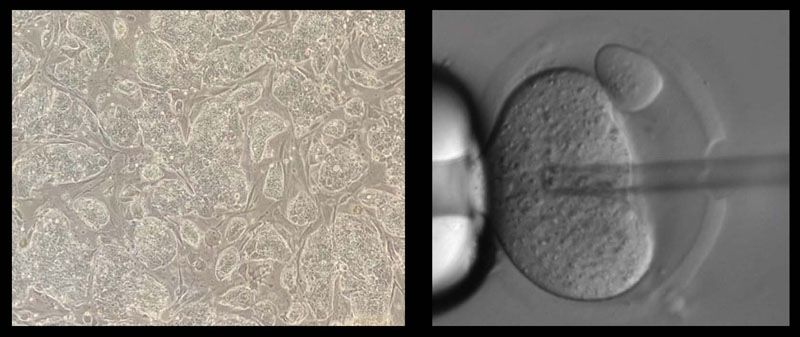
In efforts to overcome this deficiency, the research team has focused on creating sperm from a man’s own body cells. Using mouse stem cells, they developed a simple three-dimensional microenvironment that mimics some of the natural conditions within the testis, where spermatozoa normally develop. Within these tiny spherical structures, the stem cells were guided through the stages of male germline development over the course of about one month. By day 29, the completion of the spermatogenesis cycle in mice, a preponderance of cells had matured into haploid male germ cells (i.e., exhibiting the expected half of the normal genetic material characteristic of all gametes).
“This study demonstrates the ability to generate functional male germ cells from embryonic stem cells through a simple and scalable 3D culture system, capable of sustaining full embryo development and the delivery of live offspring,” said the study’s senior author Dr. Gianpiero D. Palermo, the Blavatnik Family Professor of Reproductive Medicine at the Ronald O. Perelman and Claudia Cohen Center for Reproductive Medicine (CRM) at Weill Cornell Medicine.
To test whether these newly generated cells function like spermatozoa, the investigators injected them into mouse eggs. These artificial, sperm-like cells were able to fertilize the eggs at rates similar to those fertilized by mature sperm. While embryo development was less efficient overall, and fewer embryos reached the blastocyst stage (observed after four days of in vitro development), some embryos developed normally and were transferred into receptive female mice, resulting in the birth of two live pups.
This work demonstrates that functional male gametes could be created in vitro, without the need for final maturation within an animal host. The system is also relatively inexpensive, scalable, and easier to maintain than many existing experimental approaches, the authors said.
Building on these mouse studies, the team is now translating this technology using human stem cells. In preliminary experiments using human embryonic and induced pluripotent stem cells, a substantial number of haploid germ cells have been generated using the same three-dimensional culture system. Early testing has produced euploid human embryos (embryos with the expected number of 23 pairs of chromosomes) when newly created male pseudo-gametes were injected into human eggs, suggesting that, with further research, this platform may one day help men with otherwise untreatable infertility produce genetically related offspring.
“The creation of a male gamete that can fertilize an oocyte, resulting in live pups, is a remarkable achievement. It provides hope for individuals who are either born without sperm or eggs or lose them due to therapy or illness,” said Dr. Zev Rosenwaks, co-author of the study and director and physician-in-chief of the CRM and the Revlon Distinguished Professor of Reproductive Medicine in Obstetrics and Gynecology at Weill Cornell Medicine. “This heralds an era of treatment that could eradicate infertility.”